He represents
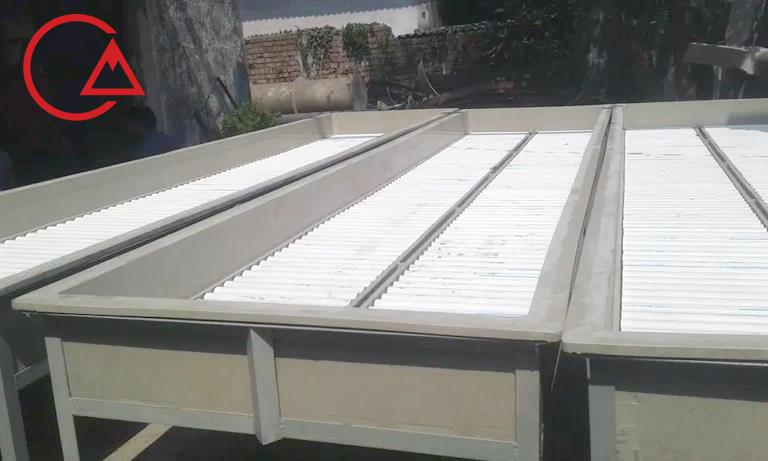
Safe charging and management of lead-acid batteries are crucial in all industries that use them . Charging lead-acid batteries, especially on an industrial scale, generates corrosive gases and acidic fumes and carries the risk of electrolyte leakage. Therefore, the use of robust, safe, and hygienic equipment to monitor and control this process is essential. Polypropylene (PP) charging containers play a key role in this and, due to their unique performance characteristics, hold a leading position in the industry.
In this article, we will consider the importance of battery charging enclosures, the properties and advantages of polypropylene as the main material for manufacturing these enclosures, industrial applications, their construction and maintenance, and their economic benefits.
Why are chargers so important?
Charging acid batteries (such as lead-acid batteries) typically involves the following risks:
Water vapor and hydrogen are produced; inadequate ventilation poses a risk of explosion.
Leakage of acidic electrolyte: Can cause severe corrosion upon contact with metal surfaces or equipment.
Environmental hazard: Improper handling can cause electrolytes to enter the sewer system or the ground.
Battery charging trays are robust and safe containers that provide a secure environment for charging batteries. They prevent acid from leaking into the environment and allow for proper wastewater collection and treatment.
Why is polypropylene the best choice?
1. High resistance to chemicals
Polypropylene is an engineering plastic with excellent resistance to acids, alkalis, and solvents . This property ensures that baths made of this material have a long service life, even when exposed to acidic vapors and electrolytes.
2. Lightweight, yet robust enough.
Polypropylene is significantly lighter than metal, yet it exhibits excellent mechanical strength. This property facilitates the transport, installation, and relocation of the charger.
3. Long lifespan
Since polypropylene bathtubs have good resistance to chemicals and mechanical stresses, they can be used for many years without losing quality or becoming deformed.
4. Electrical insulation
Unlike metal containers, polypropylene containers are electrically insulating and non-conductive. This offers a significant safety advantage when charging batteries in environments where there is a risk of electrical leakage.
5. Customization options
Polypropylene drums can be manufactured in various sizes, shapes and wall thicknesses, enabling precise production to meet the needs of different industries.
Design features of the polypropylene battery charging housing
The walls must be reinforced to prevent deformation caused by fluid pressure or the weight of the battery.
Robust, non-slip base: Serves to stabilize the battery during the charging process.
Easy entry and exit: for emptying or cleaning the bathtub.
A lid or cap can be fitted: this serves to control acid vapors and is connected to the ventilation system.
Temperature resistance: Polypropylene is characterized by stability in the temperature range of -20 to +100 degrees Celsius, making it ideal for use in industrial environments.
Application of polypropylene charging cubes for batteries
Automotive and transport industry : Used for charging batteries in commercial vehicles, forklifts and electrical equipment.
Warehouses and logistics centers: are used for the safe handling of the charging process of batteries for electric forklifts and warehouse technology.
Power plants and petrochemical industry: Use of emergency power batteries in emergency power systems.
Battery repair and maintenance workshop: Used for testing, charging and repairing batteries.
The telecommunications industry and data centers require high-performance UPS batteries, and their safe charging is crucial.
Economic advantages of using polypropylene battery charging boxes
Lower maintenance costs: Thanks to the high corrosion resistance, no coating or acid-resistant layer is required.
Extends battery life: Prevents acid leakage and contact with other devices.
To avoid corrosion damage to surrounding equipment: Keep the loading area clean and safe.
Long-term investment: Although the purchase price of a polypropylene bathtub is somewhat higher than that of a conventional bathtub, you can save money in the long run due to its long lifespan and low maintenance and replacement costs.
nn_en_navod_cse_tc_w_ipwm_mfb_17868
Maintenance and safety tips
Regular inspection: The walls and floor of the bathtub should be regularly checked for cracks and damage.
Regular cleaning: It is recommended to clean with water and a neutralizing agent to prevent the formation of acid deposits.
Adequate ventilation: A ventilation system must be installed in the loading area to remove acid fumes.
Use of personal protective equipment: Workers must wear gloves, safety goggles and acid-resistant clothing.
Do not overload: The battery casing must be designed to support the weight and number of batteries.
Comparison of polypropylene bathtubs with other materials
| Special feature | Polypropylen | Metal (steel/iron) | Fiberglass |
|---|---|---|---|
| chemical resistance | Very large | Medium size (with lid) | higher |
| Weight | style | difficult | half |
| electrical conductivity | Non-conductive | driver | Non-conductive |
| Life | many | half | many |
| Maintenance costs | strange | many | half |
| Customization options | higher | limited | half |
In conclusion
Polypropylene charging tanks are among the best solutions for many industries that need to charge lead-acid batteries on a large scale. In addition to high safety, chemical resistance , and a long service life, these tanks also offer cost advantages. Selecting the right charging tank, taking into account the operating conditions , the number of batteries, and the charging method, ensures high performance and reduces long-term operating costs.